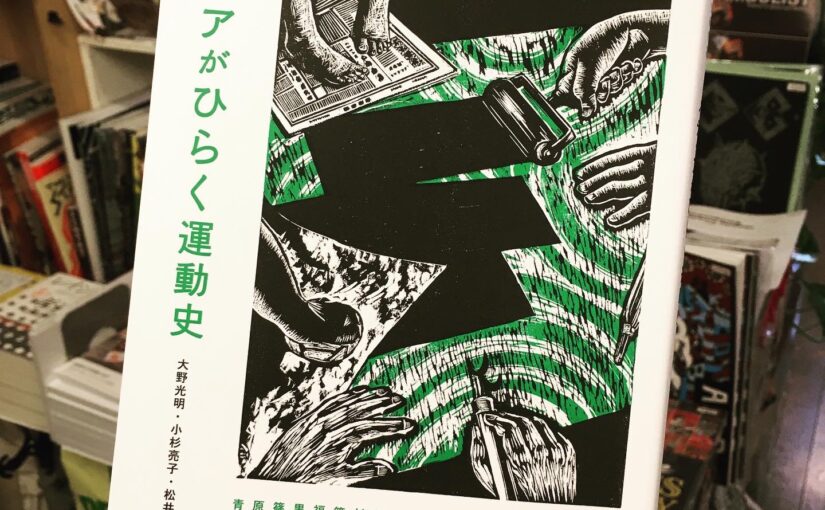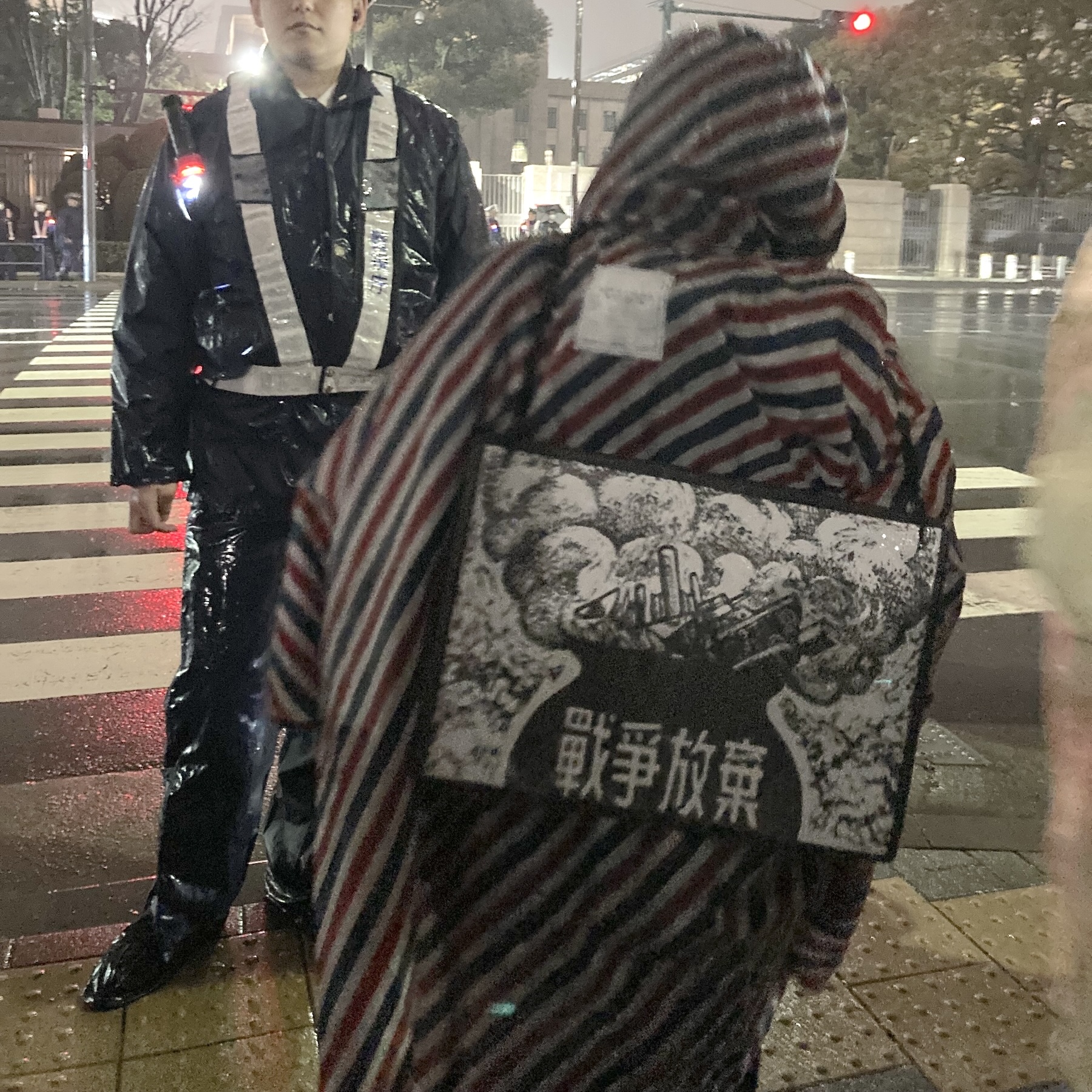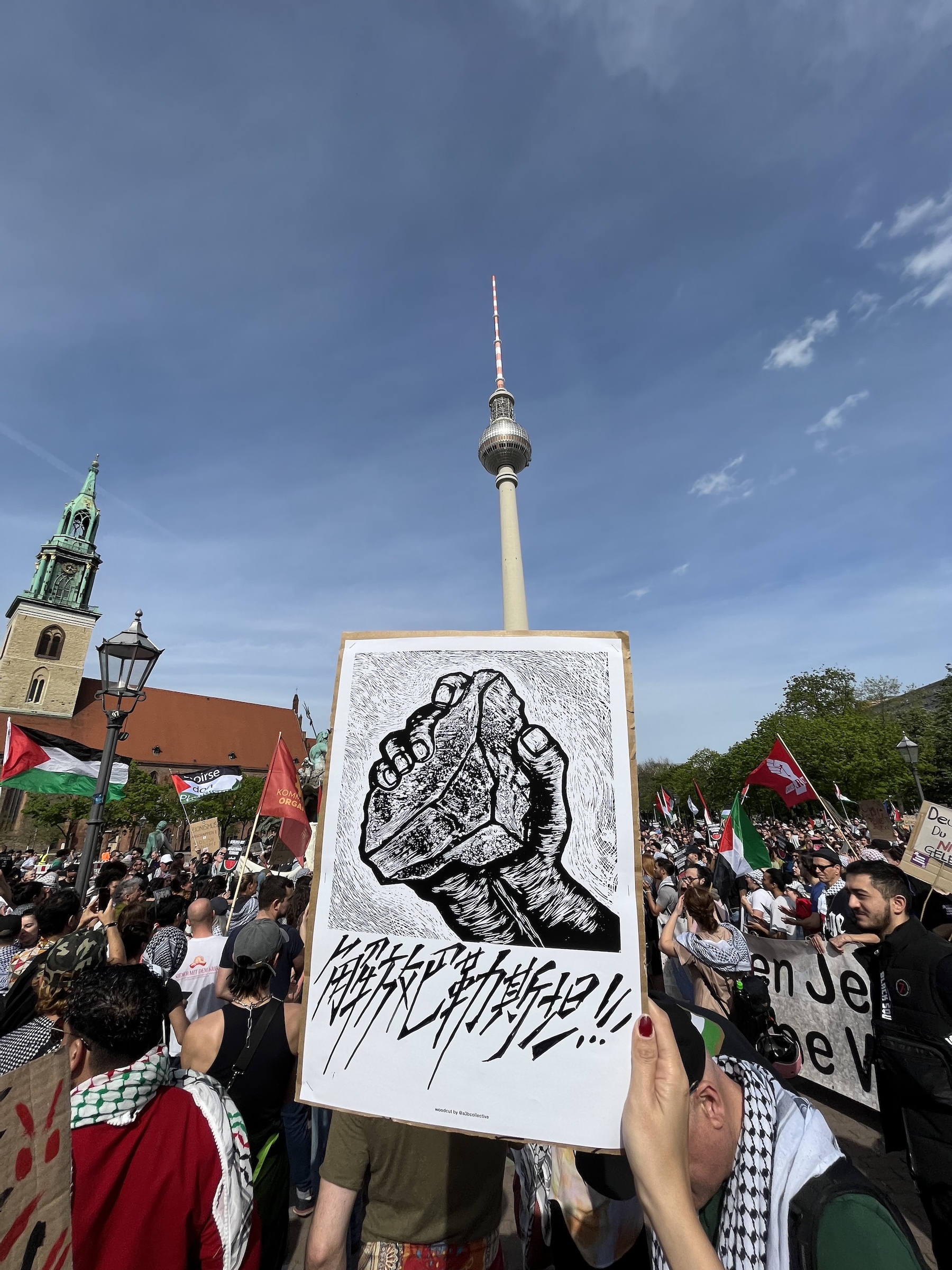
This Fall, A3BC was invited by @mapping_woodblock to share 3 of our recent pieces “Decomposers” ”Tsubute” ”Remembering Hanaoka” at the Carving Dissensus exhibit (Oct 11 – Dec 19), hosted by @espaceno.ir an anarchist cooperative/cultural center in St. Imier, Switzerland.
We are delighted to share our work alongside the empowering pieces from our friends, especially here in St. Imier, a place with a long history of anarchist exchange.
We are also humbled to hear that this is a very rare opportunity to share political blockprint art from Asia, and that so many people from other regions are coming to St. Imier to see the works.
On this occasion, I (Aki; @an_aki_art ) wanted to talk about some spaces that I visited during my residency in Espace Noir. These spaces were all welcoming and eye-opening towards possible ways to rise together against fascism.
1. Espace Noir (EN)
This space became the homebase during my residency. The kindhearted members of EN took me around Switzerland and shared their ways of life and action.
On the 1st floor, there is a tavern, a bookstore, a meeting room, and a storage area that stores anarchist newspapers from 40 years ago. In the basement, there is a music venue and a movie theater. On the upper floors are the gallery that hosted the exhibit as well as rooms that host traveling artists and refugees.
The building that now houses EN used to be a watchmaking workshop in St. Imier, a town once sustained by the watch industry. After years of abandonment, the building was nearly bought by urban investors for commercial gain. Anarchists prevented that from happening by buying the building themselves, and, in 1984, turning it into a collectively run hub for organizing, as well as a cultural space featuring a cinema and gallery.
Having operated for 40 years, it now includes families where two generations have been involved. Today, it is the only bookstore and only movie theater in St.Imier.
It continues to be a place for anarchists and leftist activists to organize, and one that welcomes anyone who seeks to enjoy the company of others in safety and solidarity.
photos by me and achakov
2. The Town of Saint-Imier
Axl (@espaceno.ir ), Gilang (@gilangpropag ), achakov and I (Aki; @an_aki_art ) walked around St. Imier, home of Espace Noir.
We started from the building where the anarchist gathering known as the “St. Imier Congress” first convened in 1872. Recently as well, anarchists had big gatherings in St. Imier, in 2012 and 2023, in which our friends organized workshops and cooked food for the gathering.
As we walked, a large golden ring sculpture came into view. Axl told us this was made when the city government commissioned an artist to make a symbol for St. Imier, upon which a golden ring was installed as a symbol of a watch. Little did they know that the artist was an anarchist too, who secretly included the meaning of the Circle-A in the golden ring. At times, the letter A was made inside the ring, thus turning the object into an actual golden circle-A.
We stopped at the ruins of Restaurant de la Clef, a restaurant frequented by major anarchist figures like Bakunin and Guillaume. After work, local workers would come to this restaurant for an evening drink and listen to anarchists who’d suddenly jump onto the tables and start speeches. Workers and anarchists got along very well, as like-minded thinkers and hard-living drinkers. After the restaurant closed, there was debate over whether the building should be preserved. Members of Espace Noir and others fought to save it, but it was ultimately demolished in 1996 by right-wing forces who frowned upon the history of anarchism.
We also stopped by the farmhouse where Bakunin once lived. Bakunin was apparently a very heavy smoker, and people often saw smoke rising from the house.
When we stopped by, there was no smoke and hence, presumably, no Bakunin.
There was just a clear blue sky and a new breed of anarchists.
3. The City of La Chaux-de-Fonds
In the 1930s, Swiss labor unions grew more active, which employers found troublesome. To discourage strikes, they proposed basic labor standards, and both sides agreed.
This agreement shaped modern Swiss labor relations. Today, however, construction-industry employers want longer hours without wage increases, prompting unions to warn they’ll have no choice but to strike.
A strike in La Chaux-de-Fonds was scheduled for November 3rd.
As soon as achakov and I (Aki; @an_aki_art ) left the station with members of Espace Noir (EN; @espaceno.ir ), we heard strike chants and walked toward them. The main street was filled with people carrying labor-union flags; Axl said it was a large turnout for a construction-industry protest.
There we met Michel, another EN member, who led us on an “anarchist city walk” through La Chaux-de-Fonds.
Once a small town, it turned to watchmaking in winter when farming stopped. After the 1794 fire, the Jura region redesigned the city for the watch industry, widening streets and adding roof windows to let sunlight into workshops.
One theory about why anarchism spread here is that the old system of division of labor in watchmaking (each craftsperson autonomously producing parts in non-hierarchical workshops) matched well with anarchist ideas. In fact, La Chaux-de-Fonds and Saint-Imier became bases of activity for figures like Kropotkin, Bakunin, and Guillaume, and the Jura region became a center of anarchism.
La Chaux-de-Fonds, once responsible for 70% of the world’s wristwatches, declined with the rise of digital models, yet its lingering anarchist legacy still shows in its largely left-wing municipal council.
The city is filled with organizations that support the disenfranchised. The circle-A symbol appears not only as graffiti but also on store windows.
One of the buildings we visited was inspired by the designs of the socialist Charles Fourier. The rooms are arranged in a U-shape, designed so residents can easily see one another.
The “anarchist city walk” ended with a visit to the building where Kropotkin once lived.